Elamitologist Abdolmajid Arfa’i, decipherer of Cyrus Cylinder, dies at 86
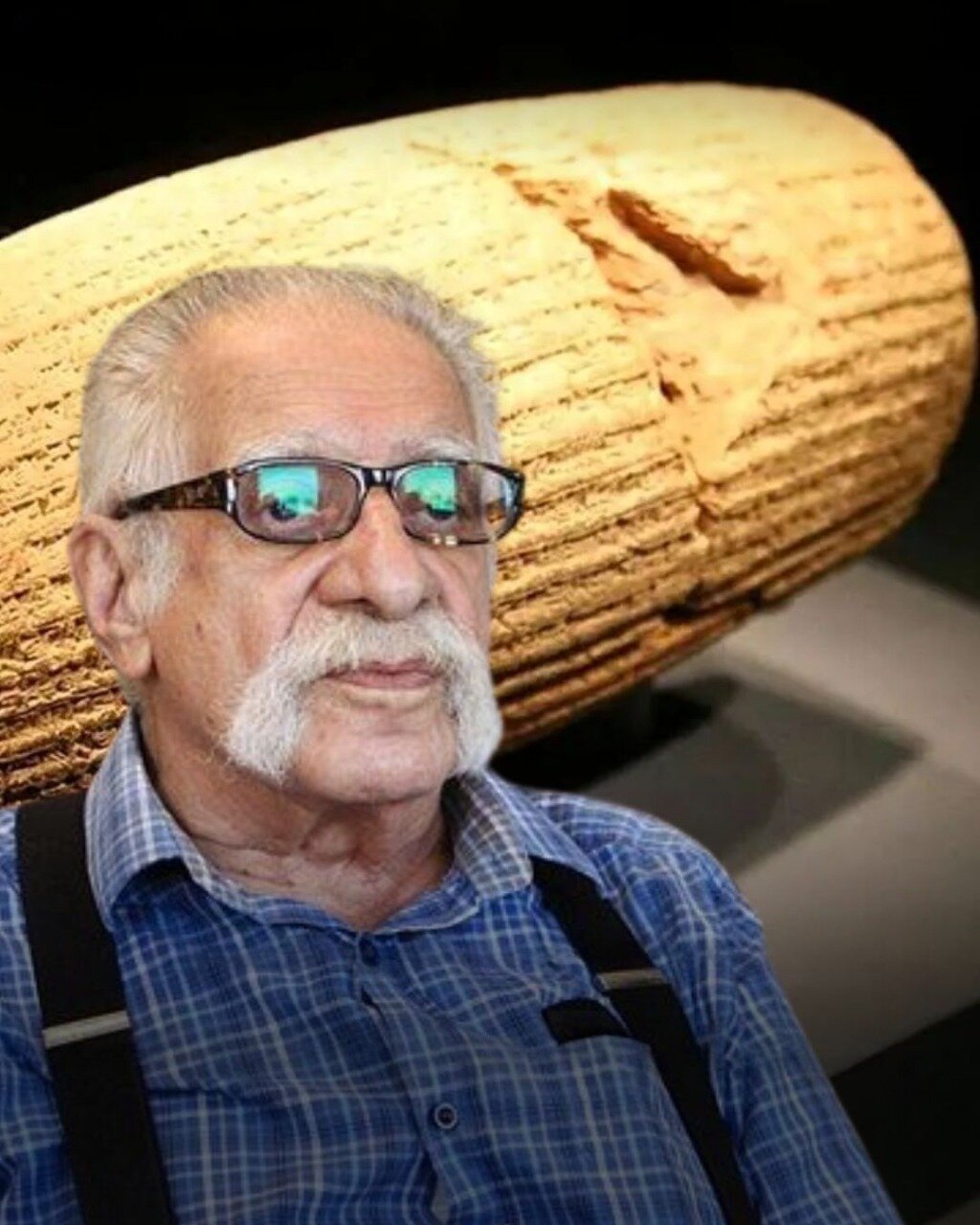
TEHRAN – Professor Abdolmajid Arfa’i, Elamite scholar and prominent researcher of ancient Elamite and Akkadian languages, died on Wednesday, after a period of illness. He was 86.
Born in 1939 in Bandar Abbas in southern Iran, Arfa’i was regarded as one of the country’s foremost experts on Elamite and Akkadian languages and one of the last surviving specialists worldwide capable of reading Elamite cuneiform. His name was closely associated with the translation and study of ancient inscriptions, particularly Achaemenid-era documents.
Arfa’i devoted decades to the reading and translation of ancient texts and inscriptions. He was widely known for his Persian translation of the Cyrus Cylinder from its original Neo-Babylonian language. The artifact, dating to the Achaemenid period, is considered one of the most significant historical documents of ancient Iran.
He translated over 600 clay tablets from the reign of Darius the Great that had been read by Richard Treadwell Hallock, a professor at the University of Chicago and a prominent Elamologist and Assyriologist who died in 1980. The translations were included in the first volume of a series on Persepolis tablets.
In that regard, Jebrael Nokandeh, Director of the National Museum of Iran, expressed his condolences on the passing of Dr. Arfa'i to the academic community and Iran's cultural heritage community. He also highlighted that a portion of the Persepolis Fortification Tablets were deciphered and translated through his scholarly effort and precision.
Over the course of his career, Arfa’i translated more than 2,500 Persepolis inscriptions housed at the university’s Oriental Institute. He also contributed to the reading and translation of Achaemenid-era clay tablets that had been on loan to the institute from Iran since 1935. Cultural officials said he played a key role in the return of more than 2,000 of those tablets to Iran.
Arfa’i was the founder of the Inscriptions Hall at the National Museum of Iran, where he helped organize and catalogue more than 5,000 works, according to museum director Jebrael Nokandeh. He also authored several books on Iranian history, including “The Decree of Cyrus the Great,” which examines the Cyrus Cylinder and its historical context.
A graduate of the Oriental Institute at the University of Chicago, Arfa’i earned his Ph.D. in 1974. His doctoral dissertation on the geography of Fars was based on clay inscriptions discovered at Persepolis. Before leaving for the United States, he studied Persian literature at Dar ul-Fonun, the advanced school established during the Qajar era.
In addition to his expertise in Elamite and Akkadian, Arfa’i was knowledgeable in Avestan and Pahlavi languages and contributed to deciphering Mesopotamian legal inscriptions. He was also recognized for his extensive knowledge of the history and culture of ancient Mesopotamia.
In 2015, Arfa’i received Iran’s “Iranian Cypress” lifetime achievement award in the field of cultural heritage. In June 2022, he was honored at a ceremony titled “Faces to the Sun,” organized by the Iranian National Commission for UNESCO in cooperation with the National Museum of Iran. During the event, he was awarded the UNESCO Sun Medal and a medal from ICOM Iran. The ceremony was attended by cultural officials and scholars, including Hojjatollah Ayyubi, then director of the Iranian National Commission for UNESCO, Mir Jalaleddin Kazzazi, a scholar of the Shahnameh, and linguist Jaleh Amuzegar.
Throughout his academic career, Arfa’i taught and conducted research at universities and research centers in Iran, mentoring students in the field of ancient languages. Colleagues described his scholarly approach as text-based and methodical, emphasizing precision in translation and caution against unsupported interpretation.
Among his most important publications are the book The Command of Cyrus the Great (Center for the Great Islamic Encyclopedia, 2010) and the four-volume collection Persepolis Fortification Tablets (Center for the Great Islamic Encyclopedia, 2008). The second volume of Persepolis Fortification Tablets was recognized as the best work in the field of ancient languages at the 27th edition of Iran's Annual Book of the Year Award in 2009.
AM
Leave a Comment